More Than a Word: What It Truly Means to Be an Immigrant
By: Nicole Nunez Diaz
The word “immigrant” shouldn’t be taken lightly because being an immigrant is a difficult experience that impacts one’s life. Don’t get me wrong, being an immigrant is not a negative thing, but the process of trying to consider another country your home is something that takes courage.
I’m from Venezuela, so my experience was immigrating from a country that has a political and economic crisis that cannot offer me the future that my parents or I want for myself. Due to this, at 13 years old, my family and I packed our lives in a suitcase and started from scratch in Colombia, looking for a better quality of life. Starting my life in a new country made me experience for the first time the feeling of having my head and heart in a different place from where I was physically, and the first couple of months were an emotional roller coaster of sadness, loneliness, fear, and having the constant feeling of missing everything that we left behind. This was a moment where having my parents and sisters with me, going through the same experience, was essential because we were able to rely on each other to move forward and adapt to the different culture, environment, and people.
Leaving your country is not just difficult because you must leave your way of living and what you’re used to behind, but also because your legal status can be an anxious and tedious thing that you have to face. I was able to move to Colombia as a dependent of my dad’s work visa, allowing me to be a resident who can study but not work in the country. I am permitted to stay in this residency until I turn 25 years old, and at that age, the country wouldn’t consider me a beneficiary of my dad, which meant that I would have to leave the country. Because of this, once I graduated from high school, I decided to see what my options were to pursue my career in a different country and avoid being an illegal resident in Colombia at 25. The opportunity of the humanitarian parole program for Venezuelans, Nicaraguans, Haitians, and Cubans here in the United States was presented, so I decided to apply. This temporary immigration status meant for me the opportunity of getting an associate’s degree, with the possibility of working at the same time to help my parents with my college expenses and start building my career to find a work visa that could give me legal stability in a country different than mine.
which gave me the time to look for another legal status to remain in the country when the two years was up. I took the opportunity, even though I had to say goodbye for the first time to my parents and sisters, knowing that I wouldn’t be able to see them for a long time because they don’t have a tourist visa that would allow them to visit me. As a person who has always been surrounded by my family and friends, having these people around means everything to me, because it’s what brings joy to my life, so having to say goodbye to even more people was a difficult decision that I made searching for the career and stability that I want in my life.

I don’t think that the experience of starting a life in a different country becomes easier the more you do it, because the process comes with the same feelings and struggles. Coming to a country that has a different language and culture from my country, and the one previous to coming here, was something I wasn’t prepared for. The struggle of communicating in a different language made me a quiet person, due to the insecurity of saying the wrong word, or being perceived by people in a way that I didn’t want to. Once I started college, my days were summarized in going to work in the morning, then commuting for an hour to college, and coming home at night were my only moments of being myself and talking to someone was with my family once I arrived home, but feeling all day the void of my friends and family that I left and spending the day thinking how much I needed a hug that would let me forget how tired I was. Because I didn’t have anything that would bring me joy, like going out with my friends or having lunch with my family, I focused all my time on school, and every free time that I had, I spent it in my room doing homework or talking with people that weren’t in the same country as me. Even though I was proud of myself for being able to help economically with my school expenses and go to school, and have good grades, I wasn’t happy. It took me months to be again what I was before coming here, to be again a confident person who likes to socialize, laugh, and go out.
On March 21, 2025, the US government announced the termination of the humanitarian parole program, giving me one month to leave the country starting from March 25. At that moment, I was in the middle of my first semester of college, meaning that I wasn’t going to be able to finish my first semester and all my hard work wasn’t going to have value in a month. During all of this, the end of the Temporary Protected Status for Venezuelans was also to be revoked for more than 300,000 Venezuelans. To keep working and pursuing my career once my Cubans, Haitians, Nicaraguans, and Venezuelans (CHNV) parole in the ends, and because my option to stay in the country after my parole expired was trying to be revoked, my only option at that moment was to voluntarily leave the country by buying a flight back to Colombia. I couldn’t afford college as an international student, without being able to work to help the expenses
At that moment, I never wanted more stability in my life, and I still do. The first thing that crossed my mind was the anger of having to say goodbye again. The thing that cost me sweat, tears, and tiredness to build again was being taken away from me in an announcement, after months of getting out of bed just for the hope of creating a life in one place. I am 21 years old, and the only thing that I want is the possibility of staying in one country, getting my degree, building a career, and not having to say goodbye to the people that I meet. After the announcement, I spent days when I felt like my life didn’t depend on me, but on any news that could come out about the parole and any decision that the government decided to make, when everything I wanted was time to think about what was going to be my next step. I felt frustrated that even though I was doing everything right, I was being kicked out like I was a criminal.
Even though a federal judge ordered the suspension of the termination of the CHNV parole program, the fear of having my plans and goals taken away hasn’t left my mind. There’s so much uncertainty about what’s going to happen to people like me, who are here just looking for a better future with the protection that parole or TPS provides, protection which is still at risk of being taken away, meaning that at any moment we may have to see in matter of days or months what other country we have to move just to avoid returning to a place that is not safe for us.
Although I could still stay in the United States legally, I don’t want my nationality to stand in the way of pursuing my goals and finding the stability I’m looking for in this country. I don’t want to feel the frustration of seeing my hard work treated as if it has no value. The uncertainty about my future here is pushing me to make the difficult decision to try, once again, to look for a future in another country and immigrate again.
I decided to book my flight for July and leave the country voluntarily, and in the meantime, enjoy the time that I had left to work and spend time with my family and friends. However, while I was at work on June 13, I received an email from USCIS saying that my case had changed again. They revoked my Employment Authorization and asked me to leave the country as soon as possible. They offered me a ticket back to my country and $1,000 to leave voluntarily, as if $1,000 was going to fix all the hard work that I put into my college, work, and all the things I had to do to adapt to this country to start a new life here.
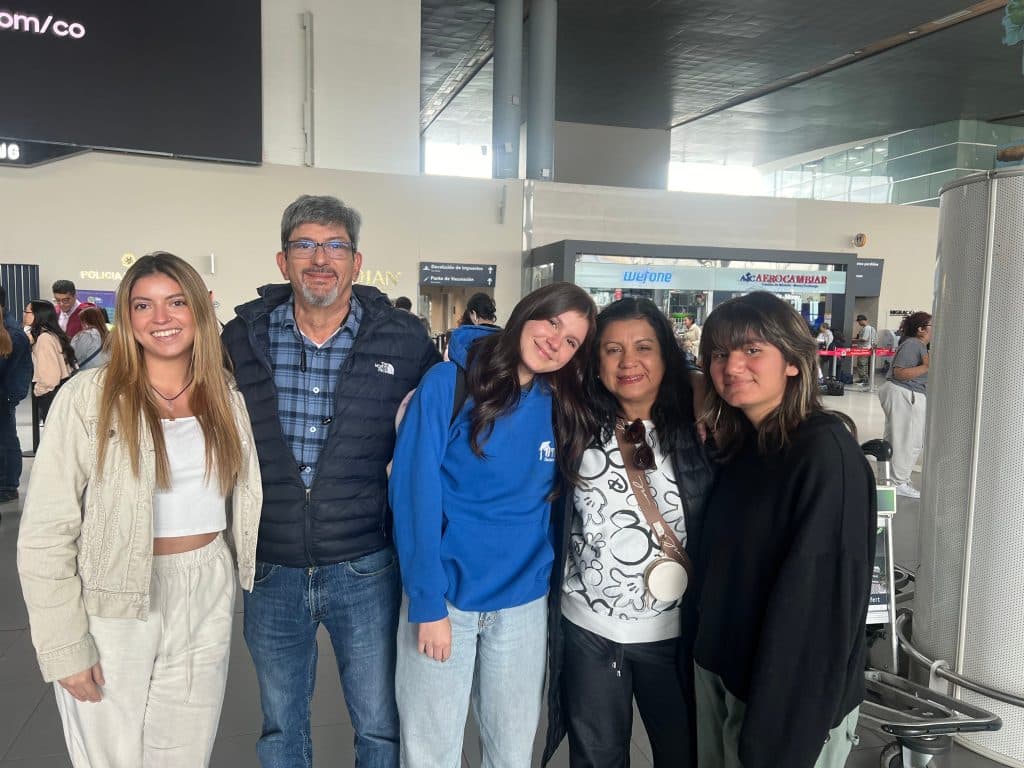
I notified my work and said my goodbyes. I changed my flight to leave a week after they made me illegal, and I left the country to come back to Colombia, where my family is, and put my life once again in suitcases and try to see what is next for me in a country that is not mine.
Even though I’m happy to see my family and friends again, that doesn’t erase what I had to leave behind. The people that I met who were there for me, the illusion of the life that I wanted to build for myself, the career that I was starting, and all the hard work that I put into my dream. It’s never easy to leave a country to start again because I’m always leaving something behind. Now, although I already have my life built in Colombia, I came back knowing that my dream was takien away from me and in the look of a new dream and a new life.