Mexican immigrants are revitalizing Philadelphia and its suburbs
By Kiara Santos
At the height of mass cross-border migration late in the 20th century, immigrants, particularly Mexicans, settled well beyond the popular destinations of America’s Sun Belt. They went to places with no significant history of immigrant settlement.
Philadelphia became an attractive destination for many new migrants as a sanctuary city. Over time, Mexicans’ experiences of migration and settlement in Philadelphia expanded into the city’s suburbs, including Norristown.
Latine residents are now close to 40% of Norristown’s population, and within decades will be a majority of local public school students. A 2022 Axios report found that immigrants in the U.S. have been gravitating toward suburban communities outside Philadelphia, including Montgomery County, to find affordable housing and support growing businesses.
Money initially motivated the immigrants’ push toward smaller cities, where housing, jobs and education are more accessible than in the metropolis.
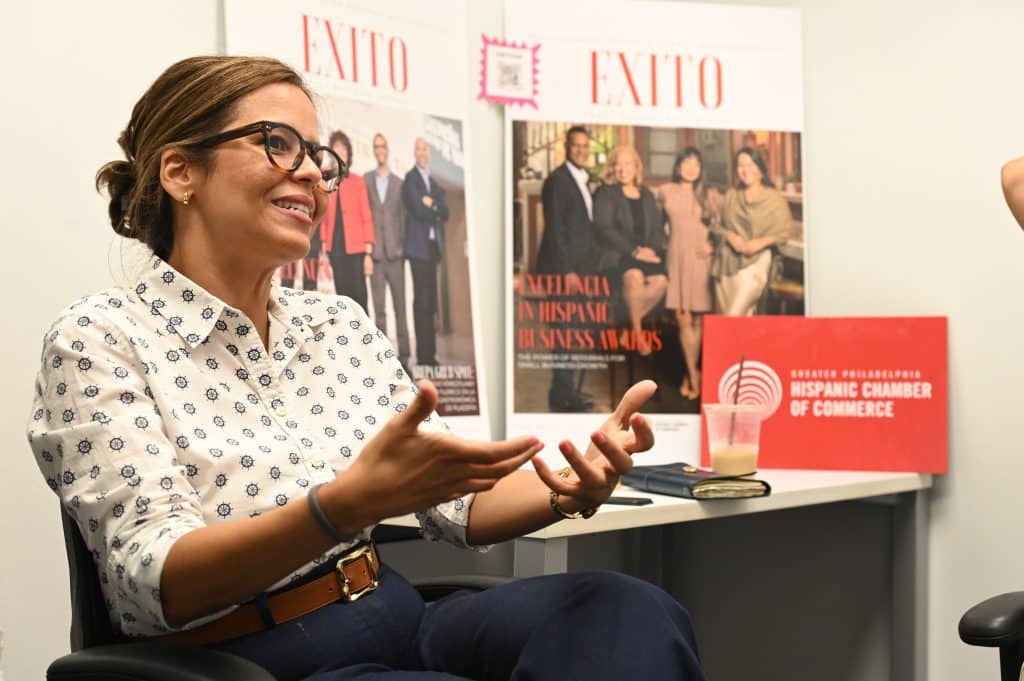
A byproduct of that trend is that the media change their tone when Latino immigrants settle in, says Jennifer Rodriguez, CEO of the Greater Philadelphia Hispanic Chamber of Commerce. Her business organization supports Latino entrepreneurs through workshops, robust resources that help start-ups, and a community network.
“The most rewarding part of my job is seeing what we always say, that this country is a nation built by immigrants,” Rodriguez said.
“Immigrants, particularly in Philadelphia, have taken and have invested in locations that were seen as not having a lot of opportunity, as not being desirable places to be necessarily,” Rodriguez said. “And really seeing the promise of these places, and revitalizing them to the point that these are desirable communities now.”
When Canada, Mexico and the United States approved NAFTA — the North American Free Trade Agreement — in 1994, many Mexicans were suffering because a slumping national economy was cutting into incomes for average workers. Many Mexicans left home, particularly in rural regions such as Puebla, and came to the United States in large numbers, aiming to establish their own wealth in the United States.
Their relatively low wages boosted the middle and upper classes through their labor, and migrants began to revitalize blighted neighborhoods, taking over from proprietors who had left the area.
The post-NAFTA migration brought migrants to Philadelphia suburbs, with the largest number arriving in Norristown.
In his 2022 book, “The Sanctuary City: Immigrant, Refugee, and Receiving Communities in Postindustrial Philadelphia,” Domenic Vitiello tells an origin story: An Italian-American man went to Acapulco on vacation, fell in love with a woman, and brought her back with him to Norristown. She then invited her friends and family to town, creating a snowball effect of people coming to the community for work.
The consulate steps up
By 2000, the U.S. Census reported that about 3,000 people of Latin American origin — mostly Mexicans, but also Puerto Ricans — lived in Norristown. By 2010, the number had risen to 10,000. The Mexican arrivals reversed the population loss the town had experienced since the 1970s, when factories and mills left.
However, many migrants had to pay coyotes — human smugglers — to bring them across the Mexican-American border and did not have legal documentation to work, reside or learn in America. The Consulate of Mexico began to adapt to the city’s progressive sanctuary city laws by providing many arrivals with various forms of documentation, resources for education, finance, and language accessibility needs, among others.
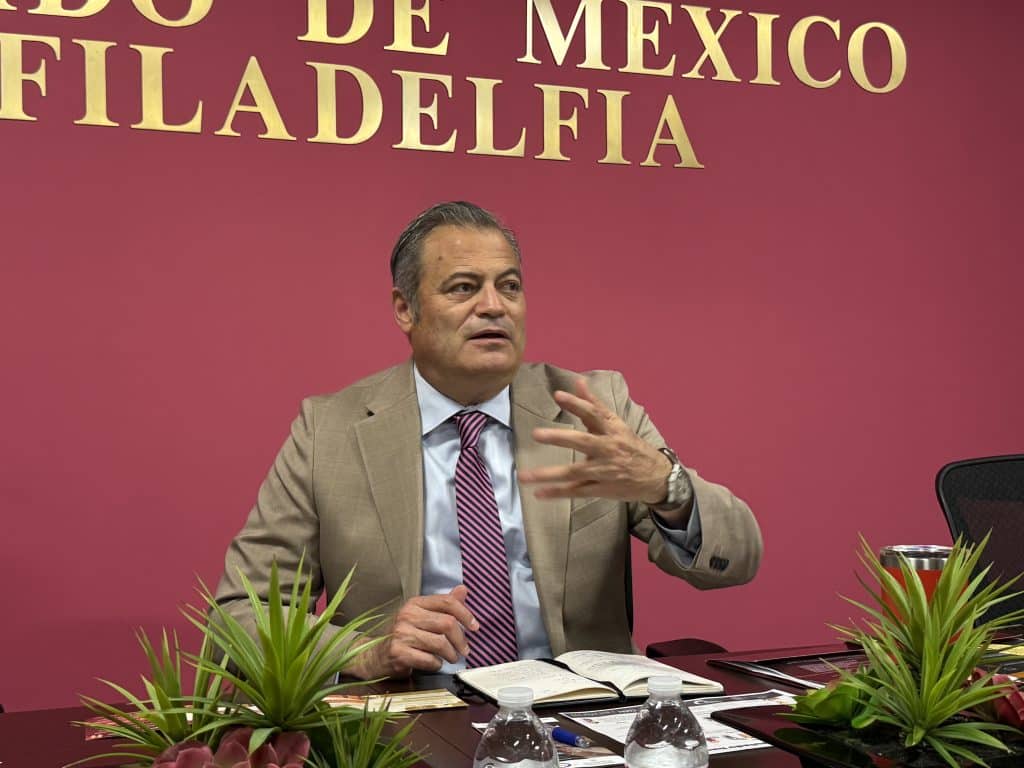
“It is very important to us to provide support to the Mexican community,” said Carlos G. Obrador Garrido Cuesta, the head consul of the Consulate of Mexico in Philadelphia. “We do this across several areas: immigration, human rights, criminal law, family law, labor law, and administrative matters. This forms the core of our work.”
“We also provide consular services — specifically documentation — such as issuing Mexican passports and consular ID cards. We also handle civil registry services; for instance, Mexican nationals whose children were born here can bring them to the consulate to register them as children of Mexican nationals, thereby obtaining dual nationality,” the head consul said.
“But, we also specifically serve the most vulnerable members of our community: undocumented individuals. While the number of undocumented people from Mexico is decreasing, estimates suggest there are around 4 million of them across the United States. Here in our area, I would say there are fewer than 100,000. Regardless, it is a very important — fundamental — undertaking.”
A division of the consulate, the Department of Communities, works closely with the immigrant community.

“In the Department of Communities, we have three areas we focus on: health, education and finance,” said Tamara Contreras, the consulate’s community manager. “In these three areas, we seek out organizations that provide services to the community in Spanish and offer them workshops and talks; we also organize bilingual weeks where institutions come to offer services and inform the community about what they are doing for them.”
Laying the groundwork
Much like Norristown, Philadelphia’s Mexican population, dubbed “Puebladelphia,” has taken the once-blighted Italian market on 9th Street and created a home for itself.
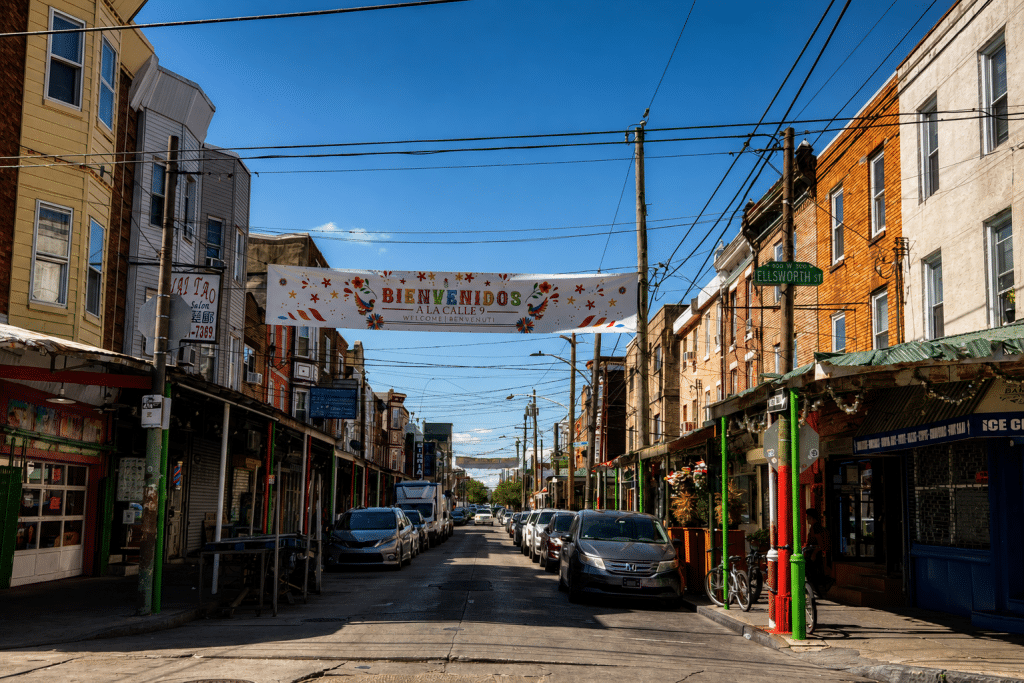
The story goes that Efren Tellez, a farmer from San Mateo Ozolco, came to the states in 1995 and settled in Camden, New Jersey. He walked aimlessly across the Ben Franklin Bridge and stumbled upon a restaurant sign: “Tequilas Restaurant.” David Suro owned the upscale Mexican restaurant, and gave Tellez a job as a dishwasher.
Tellez moved to a cheap room in South Philadelphia and began to encourage his friends to join him. By 2005, thousands of immigrants had settled in Philadelphia. The first arrivals were mostly men of working age, including some teenagers.They often lived together in large numbers so they could save money to send back home, and traveled frequently between their native home and their new home to help bring their family and settle more permanently.
That trend echoed the communal resilience and development of Italian immigrants in the area a century before — and, ironically, the same flag colors.
In that way, Mexicans helped lay the groundwork for other Latin American immigrants to settle in and around Philadelphia — and to combat the racism the community faces as fear of deportation rises in President Trump’s second term.
Businesses thrive and provide groceries, restaurants, law firms, murals, cafes and much more. Walk across the Bella Vista corridor, and it’s impossible to miss the vibrancy and camaraderie.
“Our community is incredibly resilient,” said the Consul. “The strength of migrants moves mountains. We are a community that adapts and knows how to forge ahead despite any challenge or difficult situation. We are the people who get the job done.”
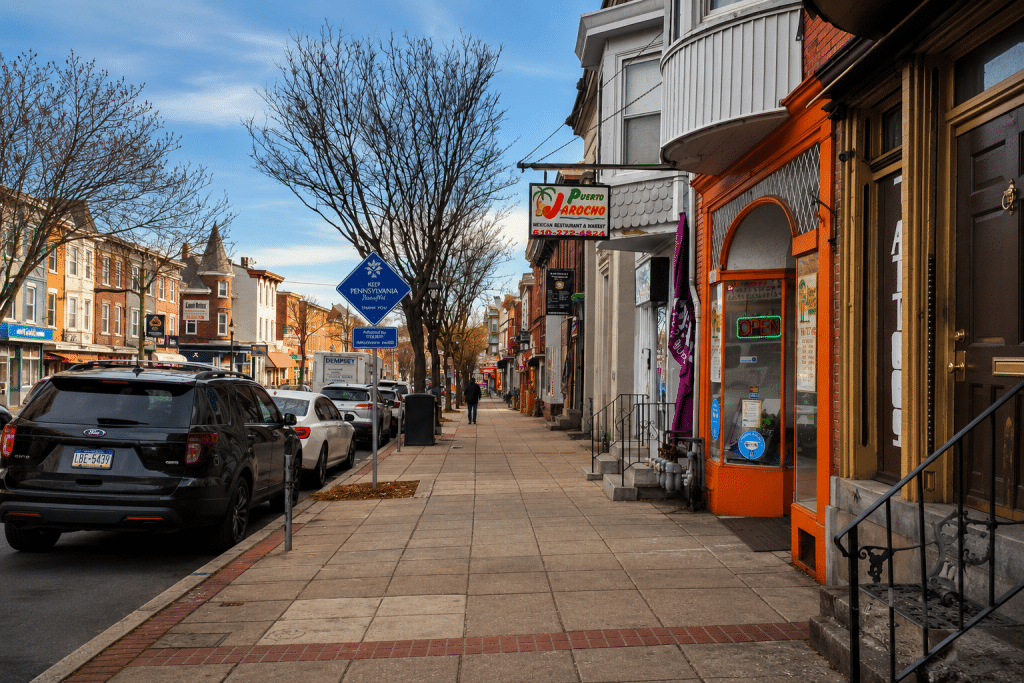
This article, produced by 2Puntos in collaboration with Metro Philadelphia, is part of a 10‑part series exploring two of Pennsylvania’s most diverse areas — South Philadelphia and Norristown — both home to vibrant and growing Latino communities. The series will be published across both outlets and released monthly.

Los inmigrantes mexicanos están revitalizando Filadelfia y sus suburbios
Por Kiara Santos – periodista independiente
A finales del siglo XX, en el punto más alto de la migración masiva transfronteriza, los inmigrantes —particularmente los mexicanos— se establecieron mucho más allá de los destinos populares del Sun Belt estadounidense. Llegaron a lugares sin una historia significativa de asentamiento inmigrante.
Filadelfia se convirtió en un destino atractivo para muchos nuevos migrantes al ser una ciudad santuario. Con el tiempo, las experiencias de migración y asentamiento de los mexicanos en Filadelfia se expandieron hacia los suburbios de la ciudad, incluido Norristown.
Los residentes latinos representan ahora cerca del 40% de la población de Norristown, y en pocas décadas serán la mayoría de los estudiantes en las escuelas públicas locales. Un informe de Axios de 2022 encontró que los inmigrantes en EE.UU. han estado gravitando hacia comunidades suburbanas fuera de Filadelfia, incluido el condado de Montgomery, en busca de vivienda asequible y apoyo para negocios en crecimiento
El dinero motivó inicialmente el desplazamiento de los inmigrantes hacia ciudades más pequeñas, donde la vivienda, los empleos y la educación eran más accesibles que en la gran metrópolis.

Un efecto secundario de esa tendencia es que los medios cambian su tono cuando los inmigrantes latinos se establecen, dice Jennifer Rodríguez, directora ejecutiva de la Greater Philadelphia Hispanic Chamber of Commerce. Su organización empresarial apoya a emprendedores latinos mediante talleres, recursos sólidos para startups y una red comunitaria.
“La parte más gratificante de mi trabajo es ver lo que siempre decimos: que este país es una nación construida por inmigrantes”, dijo Rodríguez.
“Los inmigrantes, particularmente en Filadelfia, han tomado e invertido en lugares que antes se consideraban sin oportunidades, lugares que no eran necesariamente deseables”, añadió. “Y han visto el potencial de estos espacios, revitalizándolos hasta convertirlos en comunidades deseables.”
Cuando Canadá, México y Estados Unidos aprobaron el TLCAN (Tratado de Libre Comercio de América del Norte) en 1994, muchos mexicanos sufrían los efectos de una economía nacional en declive que reducía los ingresos de los trabajadores promedio. Muchos dejaron sus hogares —especialmente en regiones rurales como Puebla— y llegaron a Estados Unidos en grandes números, buscando construir su propio patrimonio.
Sus salarios relativamente bajos impulsaron a las clases media y alta a través de su trabajo, y los migrantes comenzaron a revitalizar vecindarios deteriorados, ocupando espacios abandonados por antiguos propietarios.
La migración posterior al TLCAN llevó a los migrantes a los suburbios de Filadelfia, con el mayor número llegando a Norristown.
En su libro de 2022, The Sanctuary City: Immigrant, Refugee, and Receiving Communities in Postindustrial Philadelphia, Domenic Vitiello cuenta una historia de origen: un hombre ítalo‑estadounidense fue de vacaciones a Acapulco, se enamoró de una mujer y la llevó con él a Norristown. Ella luego invitó a amigos y familiares, creando un efecto bola de nieve de personas que llegaban a la comunidad en busca de trabajo.
El Consulado interviene
Para el año 2000, el Censo de EE.UU. reportó que alrededor de 3,000 personas de origen latinoamericano —principalmente mexicanos, pero también puertorriqueños— vivían en Norristown. Para 2010, la cifra había aumentado a 10,000. Las llegadas mexicanas revirtieron la pérdida de población que el pueblo había experimentado desde los años 70, cuando las fábricas y molinos se marcharon.
Sin embargo, muchos migrantes tuvieron que pagar coyotes —traficantes de personas— para cruzar la frontera y no contaban con documentación legal para trabajar, residir o estudiar en Estados Unidos. El Consulado de México comenzó a adaptarse a las leyes progresistas de ciudad santuario de Filadelfia proporcionando a muchos recién llegados documentación, recursos educativos, financieros y de accesibilidad lingüística, entre otros.
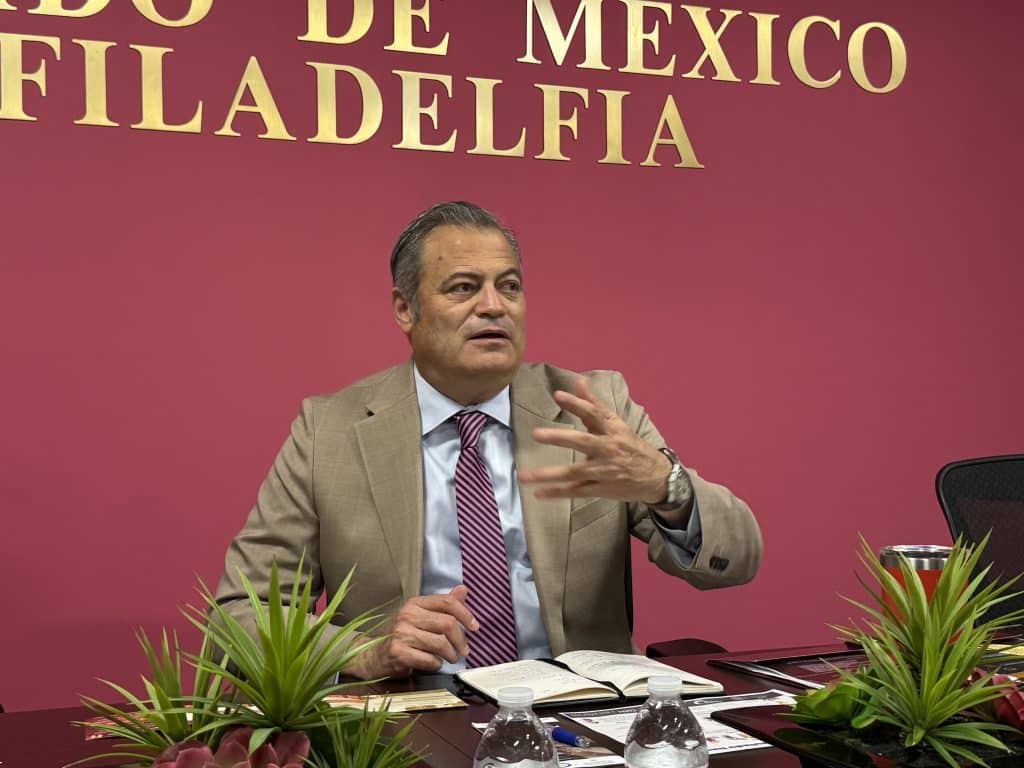
“Es muy importante para nosotros brindar apoyo a la comunidad mexicana”, dijo Carlos G. Obrador Garrido Cuesta, cónsul titular del Consulado de México en Filadelfia. “Lo hacemos en varias áreas: inmigración, derechos humanos, derecho penal, derecho familiar, derecho laboral y asuntos administrativos. Esto forma el núcleo de nuestro trabajo.”
“También proporcionamos servicios consulares —específicamente documentación— como la emisión de pasaportes mexicanos y matrículas consulares. También manejamos servicios de registro civil; por ejemplo, los nacionales mexicanos cuyos hijos nacieron aquí pueden registrarlos en el consulado para obtener doble nacionalidad.”
“Pero también atendemos específicamente a los miembros más vulnerables de nuestra comunidad: las personas indocumentadas. Aunque el número de indocumentados mexicanos está disminuyendo, se estima que hay alrededor de 4 millones en todo Estados Unidos. En nuestra área, diría que hay menos de 100,000. Aun así, es una labor muy importante —fundamental.”
Una división del consulado, el Departamento de Comunidades, trabaja estrechamente con la comunidad inmigrante en estas dos áreas.

“En el Departamento de Comunidades tenemos tres áreas de enfoque: salud, educación y finanzas”, dijo Tamara Contreras, gestora comunitaria del consulado. “En estas tres áreas buscamos organizaciones que brinden servicios en español y les ofrecemos talleres y charlas; también organizamos semanas bilingües donde instituciones vienen a ofrecer servicios e informar a la comunidad sobre lo que hacen por ellos.”
Preparando el terreno
Al igual que Norristown, la población mexicana de Filadelfia —apodada ‘Puebladelphia’— ha tomado el antiguo mercado italiano de la calle 9 y ha creado allí un hogar.
La historia cuenta que Efren Téllez, un agricultor de San Mateo Ozolco, llegó a Estados Unidos en 1995 y se estableció en Camden, Nueva Jersey. Caminó sin rumbo por el Puente Ben Franklin y se encontró con un letrero de restaurante: Tequilas Restaurant. David Suro, dueño del restaurante mexicano de alta categoría, le dio trabajo como lavaplatos.
Téllez se mudó a una habitación económica en South Philadelphia y comenzó a animar a sus amigos a unirse. Para 2005, miles de inmigrantes se habían establecido en Filadelfia. Los primeros en llegar eran principalmente hombres en edad laboral, incluidos algunos adolescentes. A menudo vivían juntos en grandes números para ahorrar dinero y enviarlo a casa, y viajaban con frecuencia entre su lugar de origen y su nuevo hogar para ayudar a traer a sus familias y establecerse de manera más permanente.
Esa tendencia reflejó la resiliencia comunitaria y el desarrollo de los inmigrantes italianos en la zona un siglo antes —y, curiosamente, los mismos colores de bandera.
De esa manera, los mexicanos ayudaron a preparar el terreno para que otros inmigrantes latinoamericanos se establecieran en Filadelfia y sus alrededores —y para enfrentar el racismo que la comunidad sufre mientras aumenta el temor a la deportación en el segundo mandato del presidente Trump.
Los negocios prosperan y ofrecen supermercados, restaurantes, bufetes de abogados, murales, cafés y mucho más. Caminar por el corredor de Bella Vista es encontrarse con una vibrante camaradería imposible de ignorar.
“Nuestra comunidad es increíblemente resiliente”, dijo el Cónsul. “La fuerza de los migrantes mueve montañas. Somos una comunidad que se adapta y sabe cómo seguir adelante pese a cualquier desafío o situación difícil. Somos la gente que hace el trabajo”.
Autor(a)