Latinos in Philadelphia say ICE immigration raids have paralyzed their lives and the local economy
For Philadelphia’s Latino community, daily life now revolves around survival, fear, and anxiety. The effects are already visible in a local economy that depends on this community.
By: Némesis Mora
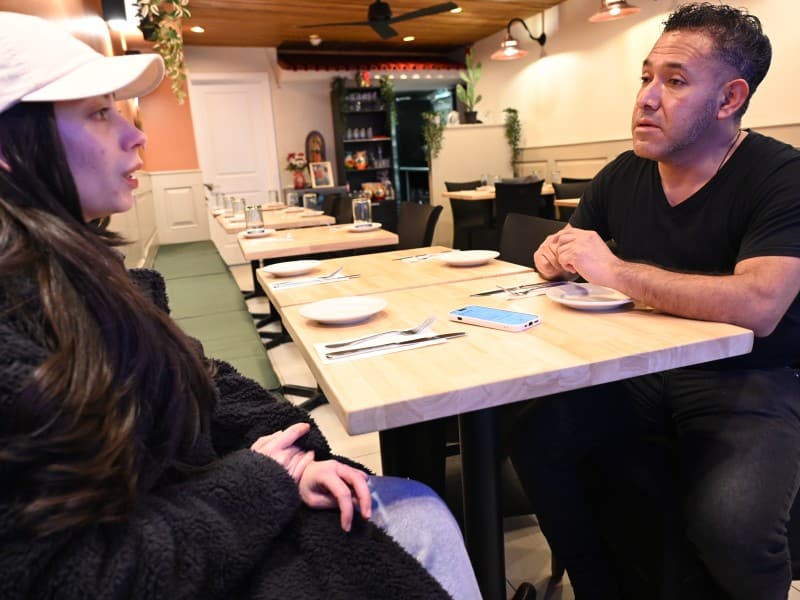
On a quiet Wednesday afternoon, 9th Street in South Philadelphia is emptier than Pedro Ríos Sandoval has ever seen it. His restaurant, Mole Poblano, doesn’t have a single customer, an unusual sight after more than 10 years in business. In all his time running the Mexican restaurant, he says he has never experienced such a severe economic downturn.
Now, he adds, nearly all the Latino-owned small businesses on 9th Street are “just surviving” in the wake of the immigration raids that have hit the city. On top of this financial strain is his fear of deportation.
“I am very afraid to go out because at any moment I could be detained and never return,” said the Mexican business owner. “Just by looking at our faces, they can tell we are Latinos, Mexicans, Hondurans, Guatemalans. That’s enough for them to detain us, drag us away, and send us back to our country.”
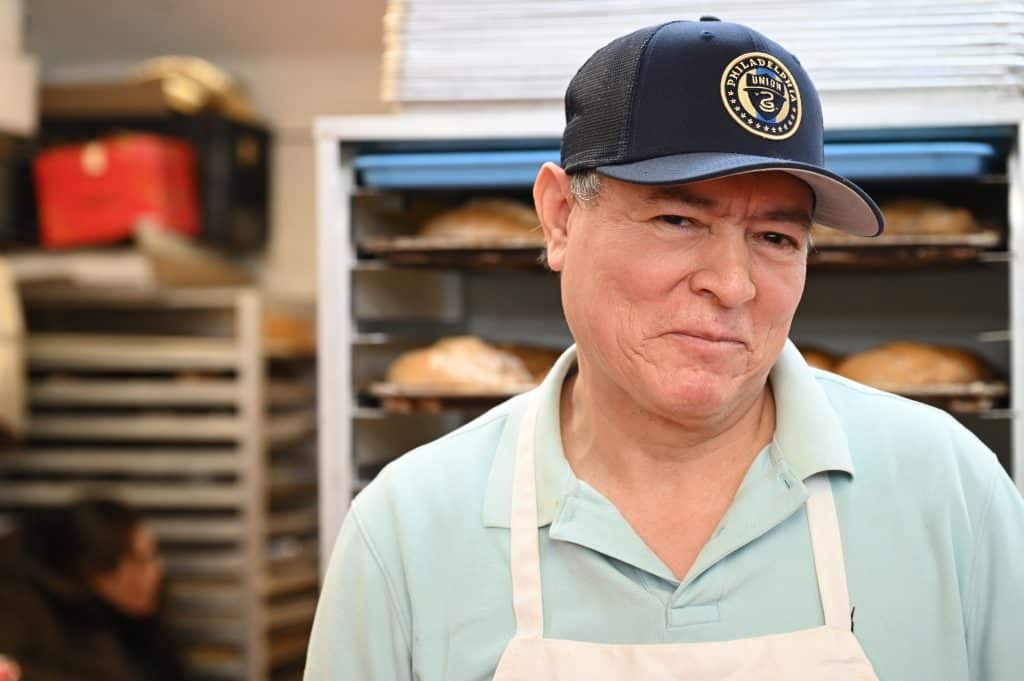
For Antonio Díaz Chávez, a baker at Las Lomas Bakery, “the economy is in the gutter.” He says fear of persecution has already had a direct economic impact on 9th Street, and if the situation continues, expects Latino-owned businesses there to close.
STEPHEN KNIGHT
According to Rolando Ramírez, who has lived in South Philly for eight years, people used to have to step aside on 9th Street to make room for the crowds walking, eating, and shopping on one of the streets historically known for its concentration of Latino small businesses.
“And today, look… no people. All we see are cars going up and down,” Ramírez said.
For Ramírez and his neighbor, who preferred to remain anonymous for security reasons, the fear and anxiety they feel the moment they step outside their homes is unprecedented. Both, originally from Guatemala, say that returning to their country would be better than living under constant threat.
“Now we go out to work and we have to keep our eyes peeled to see what might happen,” Ramírez said. “You can’t go out to buy your things anymore because you feel like the enemy is watching you everywhere, seeing where you are.”
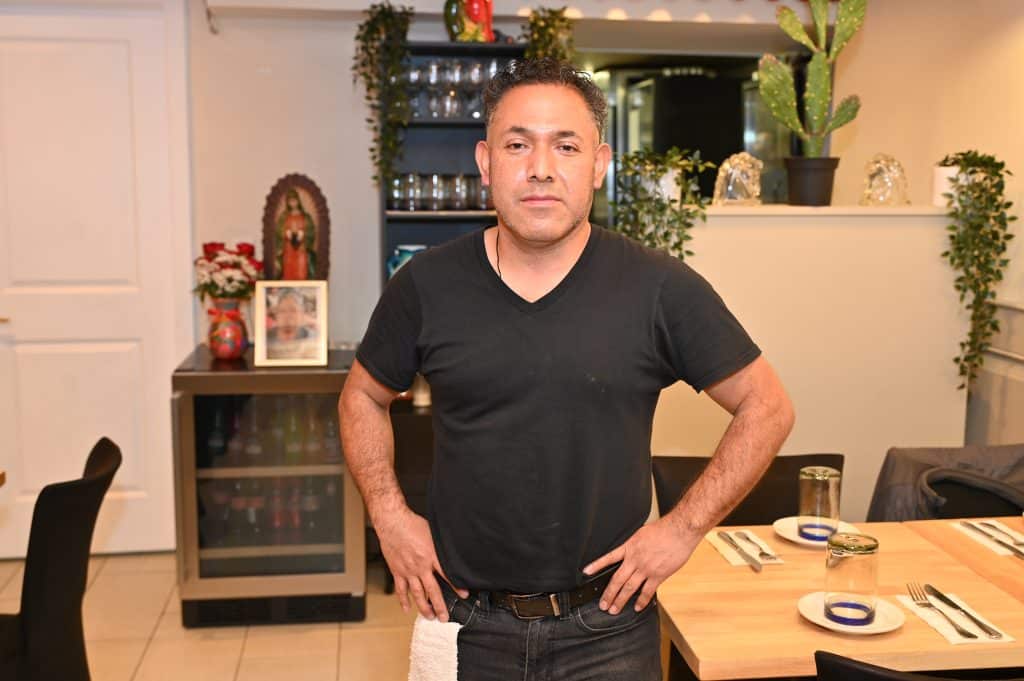
For Ríos Sandoval, the American dream that many Latinos once held is changing. It is no longer about saving money to build a better future in the United States; now it is about saving as much as possible to return to their home countries or to set aside something for their families in case they are deported.
STEPHEN KNIGHT
“Before, we were free to spend money because we had hope for a better future,” said Ríos Sandoval. “Now we are not free to spend, but to save as much and as quickly as possible so that we can do something in my country if I am detained.”
Fears spreads throughout Norris Square residents and organizations
The fear of deportation persists even among U.S. citizens, particularly within the Puerto Rican community.
Julia Ponce, a Puerto Rican who has lived in Norris Square in North Philadelphia for 40 years, has never felt so afraid to walk the streets of her neighborhood, known for its large Boricua and Dominican population. She now carries her passport wherever she goes because, she said, she could be detained solely on the basis of her skin color and hair.

STEPHEN KNIGHT
“I’m terrified that they might take me away,” Ponce said. “Sometimes at home, I’m afraid to open the door, and I think about how to be ready if something happens to me— even though you can never truly prepare for something like that.”
Ponce’s feelings are shared by her neighbors, Latino business owners, and organizations that work directly with the Norris Square community.
According to Evelyn Matos, Youth & Family Services Manager at the Norris Square Neighborhood Project, the cultural and community organization has had to take precautionary measures, such as changing locks and installing cameras, due to insecurity and fear.

Matos has also observed the economic impact of business closures in the area and the lack of residents from public spaces like Norris Square Park, where neighbors once gathered to play dominoes and connect with one another.
Vilma Portillo’s small business, La Esquina del Bronco, is among the Latino food establishments hit hard by a decline in customers in Norris Square. While she once welcomed an average of 30 customers a day, now receives only a handful. Even so, her resilience and Christian faith keep her hopeful that she can keep the business open after serving the community for roughly 17 years.
Looking ahead in Norris Square, youth instructor Guillermo Caro of the Norris Square Neighborhood Project warned that recent deportations could permanently alter the behavior of the Latino community, noting that “life will never be the same again.”

STEPHEN KNIGHT
How deportations are reshaping economic mobility for Latino families
One of the priorities of the first-generation of Latino migrants is their children’s future. Most Latino parents want their children to be more educated and more professionally successful than they were able to be. This ability to move up the economic ladder, especially when a person is born into poverty, is called economic mobility.
According to research conducted by Opportunity Insights at Harvard University, economic mobility is declining for Philadelphia’s low-income children. Given current federal immigration policies, the economic outlook for second- and third-generation immigrants could decline even further.
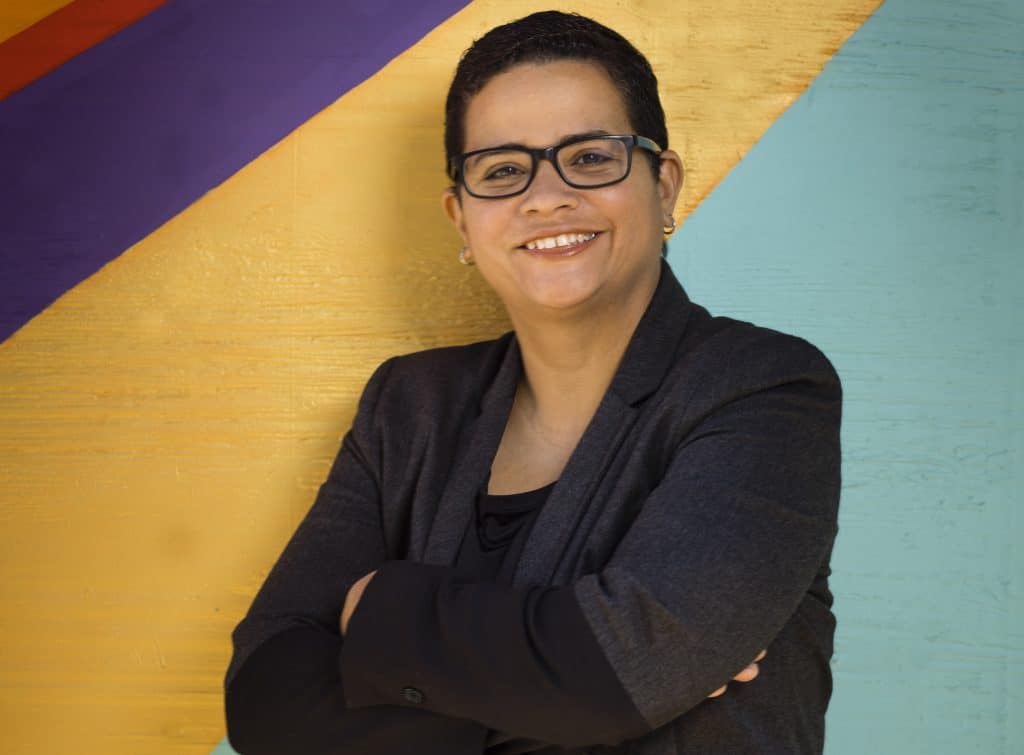
According to Dr. Michelle Carrera, CEO of the organization Xiente, when a sector of the community is afraid to leave their homes, stops spending at local small businesses, or can no longer go to work as usual, economic insecurity deepens and triggers a domino effect across the city.
“When you think about economic mobility, you really have to think about how we break the cycle of poverty,” said Dr. Carrera. “I don’t see a Philadelphia that can be competitive without our being able to maximize the talent of the Latino community and the opportunities we can offer them, so they can contribute and maximize their economic contribution to the region.”
Dr. Carrera’s analysis is reflected in the experiences of these Latino-owned businesses, organizations, and residents in North and South Philadelphia, which exemplify the economic insecurity currently being felt and the challenges that future generations will face if federal immigration policies remain unchanged.
Still, there is hope for Dr. Carrera and the work being carried out by community organizations and leaders.
“Latinos are a remarkably resilient people,” said Dr. Carrera. This resilience is reflected in stories of individuals like Ríos Sandoval, Díaz Chávez, Ramírez, Ponce, and Portillo.
Despite fear, declining income, and uncertainty, many Latino families and business owners continue showing up every day to sustain their communities.
2 Puntos Platform is one of 30 news organizations powering the Philadelphia Journalism Collaborative. Follow us at @PHLJournoCollab. This article is part of a national initiative exploring how geography, policy, and local conditions influence access to opportunity. Find more stories at economicopportunitylab.com/.

Latinos en Filadelfia aseguran que las redadas de ICE han paralizado sus vidas y la economía local
Para la comunidad latina de Filadelfia, la vida cotidiana ahora gira en torno a la supervivencia, el miedo y la ansiedad. Los efectos ya son visibles en una economía local que depende de esta comunidad.
By: Némesis Mora
En una silenciosa tarde de miércoles, la Calle 9 en el sur de Filadelfia luce más vacía de lo que Pedro Ríos Sandoval jamás había visto. Su restaurante, Mole Poblano, no tiene ni un solo cliente, algo inusual después de más de 10 años en operación. En todo ese tiempo, el empresario mexicano nunca había experimentado una caída económica tan severa.
Ahora, añadió, casi todos los pequeños negocios latinos de la Calle 9 están “apenas sobreviviendo” tras las redadas migratorias que han impactado a la ciudad. A esta presión financiera se suma su miedo constante a ser deportado.
“Tengo mucho miedo de salir porque en cualquier momento puedo ser detenido y no regresar jamás”, dijo Ríos Sandoval. “Con solo mirarnos la cara saben que somos latinos, mexicanos, hondureños, guatemaltecos. Eso basta para detenernos, arrastrarnos y enviarnos de vuelta a nuestro país”.
Para Antonio Díaz Chávez, repostero y panadero en Las Lomas Bakery, “la economía está por el piso”. Según confesó, el miedo a la persecución ya ha tenido un impacto económico directo en la Calle 9 y de continuar así la situación, muchos negocios latinos se verán obligados a cerrar.

STEPHEN KNIGHT
Según Rolando Ramírez, quien ha vivido por ocho años en el sur de Filadelfia, antes la gente tenía que hacerse a un lado en la Calle 9 para dar paso a las multitudes que caminaban, comían y compraban en una de las calles históricamente conocidas por su concentración de negocios latinos.
“Y hoy, mira… no hay gente. Lo único que vemos son carros subiendo y bajando”, dijo Ramírez.
Para Ramírez y su vecino, quien prefirió mantenerse en el anonimato por razones de seguridad, el miedo y la ansiedad que sienten al salir de sus casas no tiene precedentes. Ambos, originarios de Guatemala, afirman que regresar a su país sería mejor que vivir bajo una amenaza constante.
“Ahora salimos a trabajar con los ojos bien abiertos, pendientes de lo que pueda pasar”, dijo Ramírez. “Ya no puedes salir ni a comprar tus cositas porque sientes que el enemigo te está observando por todas partes”.
Para Ríos Sandoval, el sueño americano que muchos latinos tenían está cambiando. Ya no se trata de ahorrar para construir un futuro mejor en Estados Unidos, sino de ahorrar todo lo posible para regresar a su país o dejar algo a sus familias en caso de ser deportados.
STEPHEN KNIGHT
“Antes éramos libres de gastar dinero porque teníamos esperanza en un futuro mejor”, dijo Ríos Sandoval. “Ahora no somos libres para gastar, sino para ahorrar lo más rápido posible por si me detienen y tengo que hacer algo en mi país”.
El miedo se extiende entre residentes y organizaciones de Norris Square
El temor a la deportación persiste incluso entre ciudadanos estadounidenses, especialmente dentro de la comunidad puertorriqueña.
Julia Ponce, puertorriqueña que ha vivido en Norris Square, en el norte de Filadelfia, por casi 50 años, aseguró que nunca había tenido tanto miedo de caminar por las calles de su vecindario, conocido por su gran población boricua y dominicana. Ahora lleva su pasaporte a dondequiera que va porque, según contó, podría ser detenida sólo por el color de su piel y su cabello.
STEPHEN KNIGHT
“Estoy aterrada de que me lleven”, dijo Ponce. “A veces en mi casa me da miedo abrir la puerta, y pienso en cómo puedo prepararme por si algo pasa, aunque en realidad nunca puedes estar preparada para algo así”.
Ese sentimiento es compartido por sus vecinos, empresarios latinos y organizaciones que trabajan directamente con la comunidad de Norris Square.
Según Evelyn Matos, gerente de Servicios para Jóvenes y Familias del Norris Square Neighborhood Project, la organización cultural y comunitaria ha tenido que tomar medidas de precaución, como cambiar cerraduras e instalar cámaras, debido al miedo y la inseguridad.
Matos también ha observado el impacto económico del cierre de negocios en el área y la ausencia de residentes en espacios públicos como el Parque Norris Square, donde antes los vecinos se reunían para jugar dominó y convivir en comunidad.
El pequeño negocio de Vilma Portillo, La Esquina del Bronco, está entre los establecimientos latinos más afectados por la caída de clientes en Norris Square. Mientras antes recibía un promedio de 30 clientes al día, ahora apenas llegan unos pocos. Aun así, su resiliencia y su fe cristiana la mantiene esperanzada de permanecer con su negocio después tras servirle a la comunidad por aproximadamente 17 años.
Mirando hacia el futuro en Norris Square, el instructor juvenil Guillermo Caro, del Norris Square Neighborhood Project, advirtió que las recientes deportaciones podrían cambiar permanentemente el comportamiento de la comunidad latina, señalando que “la vida nunca volverá a ser igual”.
STEPHEN KNIGHT
Cómo las deportaciones están transformando la movilidad económica de las familias latinas
Una de las principales prioridades de los migrantes latinos de primera generación es el futuro de sus hijos. La mayoría de los padres latinos desea que sus hijos sean más educados y profesionalmente exitosos de lo que ellos pudieron ser. A esta posibilidad de subir en la escala económica, especialmente cuando se nace en la pobreza, se le llama movilidad económica.
Según una investigación realizada por Opportunity Insights de la Universidad de Harvard, la movilidad económica está disminuyendo para los niños de bajos ingresos en Filadelfia. Dadas las políticas migratorias federales actuales, el panorama económico para la segunda y tercera generación de inmigrantes podría empeorar aún más.
De acuerdo con la Dra. Michelle Carrera, directora ejecutiva de la organización Xiente, cuando un sector de la comunidad tiene miedo de salir de sus hogares, deja de gastar en los pequeños negocios locales o ya no puede ir a trabajar como antes, la inseguridad económica se profundiza y desencadena un efecto dominó en toda la ciudad.
“Cuando hablamos de movilidad económica, realmente tenemos que pensar en cómo romper el ciclo de la pobreza”, dijo la Dra. Carrera. “No veo una Filadelfia que pueda ser competitiva sin que podamos maximizar el talento de la comunidad latina y las oportunidades que podemos ofrecerles para que puedan maximizar su aporte económico a la región”.
El análisis de la Dra. Carrera se refleja en las experiencias de los negocios, organizaciones y residentes latinos del norte y sur de Filadelfia, que ponen en evidencia la inseguridad económica actual y los desafíos que enfrentarán las futuras generaciones si las políticas migratorias federales no cambian.
Aun así, existe esperanza, tanto para la Dra. Carrera como para el trabajo que realizan organizaciones comunitarias y líderes locales.
“Los latinos somos una cepa bien resiliente”, dijo la Dra. Carrera. Esa resiliencia se refleja en las historias de personas como Ríos Sandoval, Díaz Chávez, Ramírez, Ponce y Portillo.
A pesar del miedo, la caída de ingresos y la incertidumbre, muchas familias y comerciantes latinos continúan aportando sus conocimientos y recursos para sostener a sus comunidades.


Autor(a)