Do bodegas still offer economic opportunities to new generations of Latines in Philadelphia?
Many bodega owners think younger generations are less willing to embrace their parents’ demanding work ethic. Yet, this legacy can still evolve into a fresher, more creative vision that resonates with them.
By: Némesis Mora
For more than two decades, Raúl Serrata has run his bodega on the same corner of East Walnut Lane in Philadelphia. At Serrata Grocery Inc., he spent “the best years of his youth,” watching his children grow up and become professionals.
The store gave him the financial means to bring his wife and children from the Dominican Republic to the city. Yet for Serrata, the bodega is more than a livelihood: It’s his home.
His connection with customers is an indispensable part of the job. You’ll often find him in the bodega, ringing people up at the register, helping them reach items on the shelves, or offering advice and support during both difficult and joyful moments.

STEPHEN KNIGHT
When the store closes at 8 p.m., Serrata immediately begins preparing for the next day: restocking the freezers, cleaning up the day’s mess, and making sure everything is ready for a fresh start in the morning.
After nearly 20 years of this routine, Serrata typically arrives home around 9 p.m.
“I spend more time at the bodega than at home,” Serrata said. It’s no coincidence he’s there more than in his own house; he sees it as part of the challenge and a key element of the bodega’s charm.
Serrata has diabetes, and there are days when he doesn’t feel well. Still, when customers ask how he’s doing, he avoids saying he feels bad, knowing that could “ruin the day” for them.
“Papi, what’s wrong? Why are you like this today?” they ask, using the familiar nickname many Philadelphians use for their neighborhood bodega owners. Not wanting to spoil their mood, Serrata tells them everything is fine so they can go about their day in peace.
“You have to get through the day with the best attitude. Even if you don’t feel well or have a slight headache or a sore foot, you have to show your customers that you’re fine,” Serrata said.
Serrata deeply values the Latine — especially Dominican — cultural legacy of Philadelphia’s bodegas, but he predicts many may disappear if there is no one to run them. Many bodega owners are aging, he said, and it is becoming increasingly difficult for them to keep their businesses open.
He does not expect his own children to continue the tradition. Although they help him on weekends, they are focused on finishing college and building their own careers.
For Serrata, the solution lies in equipping younger Latine generations with the tools and resources they need to carry on the bodega legacy.
“Young people see how Mom and Dad live in the bodegas and don’t want that life for themselves,” Serrata said. “We have to try to help them study and prepare for the future, but they also need to understand that they must carry on the business legacy.”
‘My children resented the bodega’
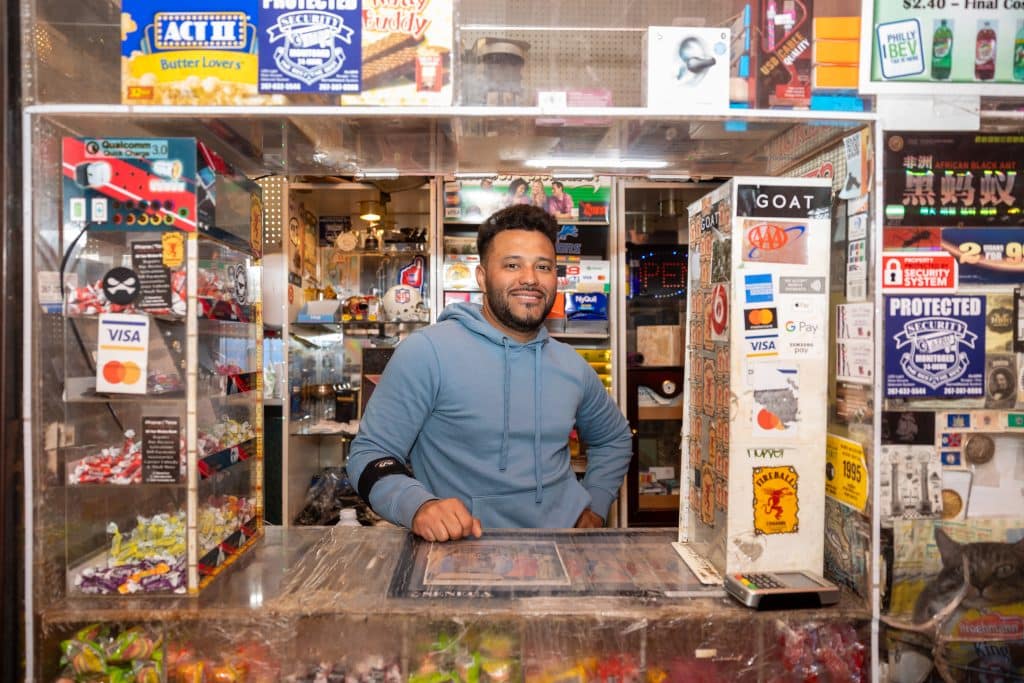
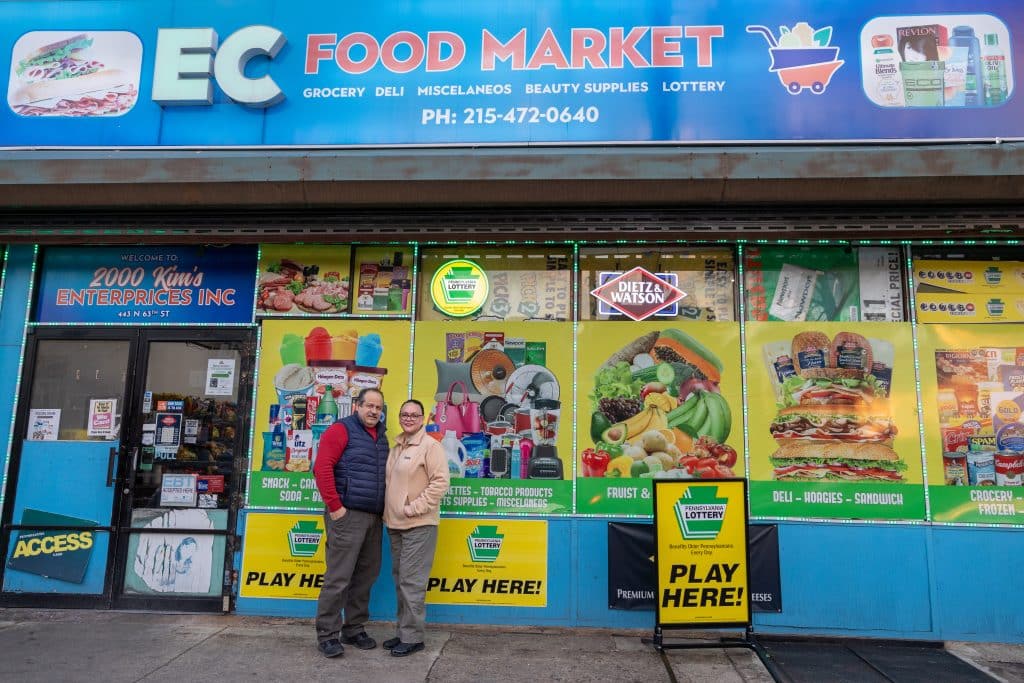
In mid-2006, Clara Olivares became a bodega owner in South Philadelphia. Today, she owns EC Food Market in West Philadelphia, and feels a deep mix of pride and nostalgia for the hard work and long hours she has invested in being a bodeguera for nearly 20 years.
Madasyn Andrews
When her two children were young, Olivares ran the grocery store with her husband. Looking back, she admits, “We lacked that quality time we should have devoted more to them.” Even though the family always lived just steps from the store — either upstairs or across the street — her children still resent the time their mother dedicated to the business while they were growing up.
“I think one of the reasons they don’t want to continue in this [working in bodegas] is because of that,” she said. “They told me we devoted too much time to the bodega. That day when they both opened up to me was hard,” she added, her eyes welling up.
Despite the challenges of running a bodega, her two children remain closely connected to the business in different ways. Her son works at the family bodega three days a week, while her daughter offers nutrition education services to bodegas throughout the city as part of The Food Trust organization.

Bodegas are family business
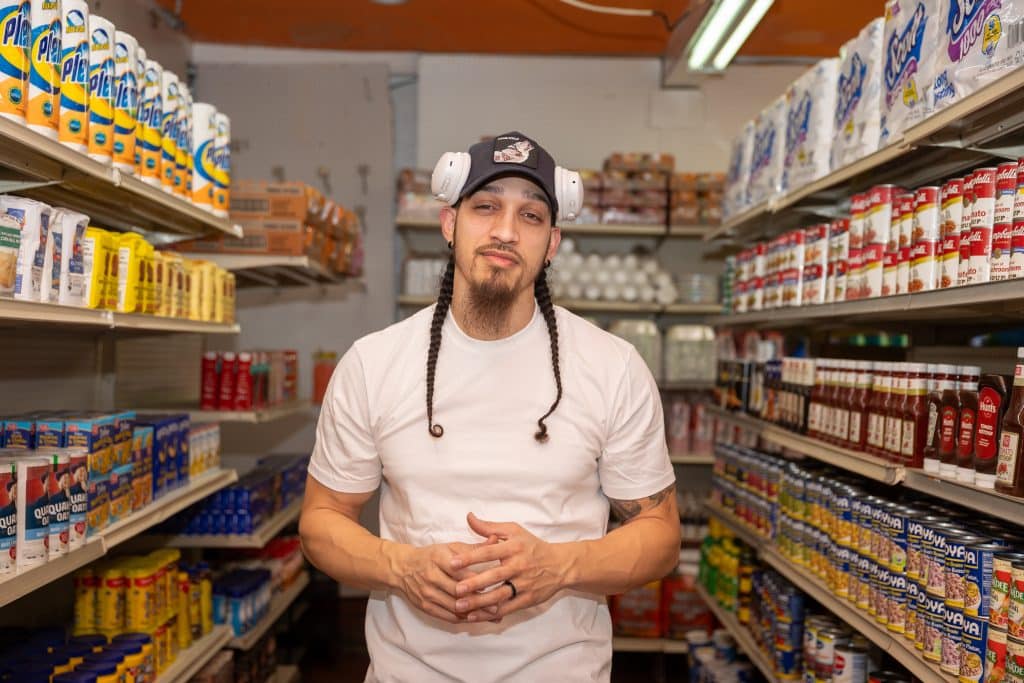
For Rafael Uceta, owning a bodega is part of his family’s legacy. He is one of six siblings with bodegas around Philadelphia and the most recent to enter the business. Although he spent most of his life working as a barber, his siblings encouraged him to open his own bodega, Las Palmas Market, in Kensington in mid-2022.
Although he has been a bodega owner for only a short time, he already feels the strain of long workdays and financial instability. According to Uceta, his biggest challenge is the city’s strict tobacco-licensing regulations, which are intended to reduce youth smoking in Philadelphia. Uceta says tobacco is one of the top-selling products for the city’s bodega owners. If conditions remain the same for another year, Uceta admits he would sell his bodega and return to being a barber.
“In this city, tobacco is what people consume the most,” Uceta said. “It’s the top seller in bodegas. They buy more tobacco than food.”
According to the president of the Dominican Grocers Association, Enereolina Meléndez, these types of city restrictions on small businesses have had a direct impact on bodegas. At the same time, the arrival of 24-hour convenience stores is drawing away customers, causing bodegas to be less frequented.
Although there is no official count of bodegas in Philadelphia, Meléndez estimates that there are 2,500 in the city, about 80% of them owned by Dominicans.
Madasyn Andrews
New generations are emulating their parents’ economic system
Many Latine small business owners have launched their businesses using a savings-and-loan method passed down from parents, relatives, and friends in their home countries.
In the Caribbean — especially in the Dominican Republic — it is known as a “san” or “tanda.” In Latin America and parts of Africa, it is often called “susu,” and in the United States, it is more widely recognized as a traditional rotating savings and credit association (ROSCA).
According to Ana Mariela Ramos, the daughter of a bodega owner and a business administration professional, susu is an ancestral economic system in which a group of people commit to depositing a set amount of money each week to build a collective fund that is distributed to one member at a time.
Ramos learned this mutual support system from her family and still practices it with her closest circle as she works on building her future business.
“That’s how my family was able to get their business back on track,” Ramos said. “It’s a system I like to talk about because, when banks don’t see our value, we see our own value, we support each other, and we grow.”
Although Ramos does not wish to continue the family bodega business, she remains committed to honoring and building on the economic foundation passed down through generations, as well as educating others so they can carry that legacy forward.
Madasyn Andrews
Reinventing the bodega concept with hip hop
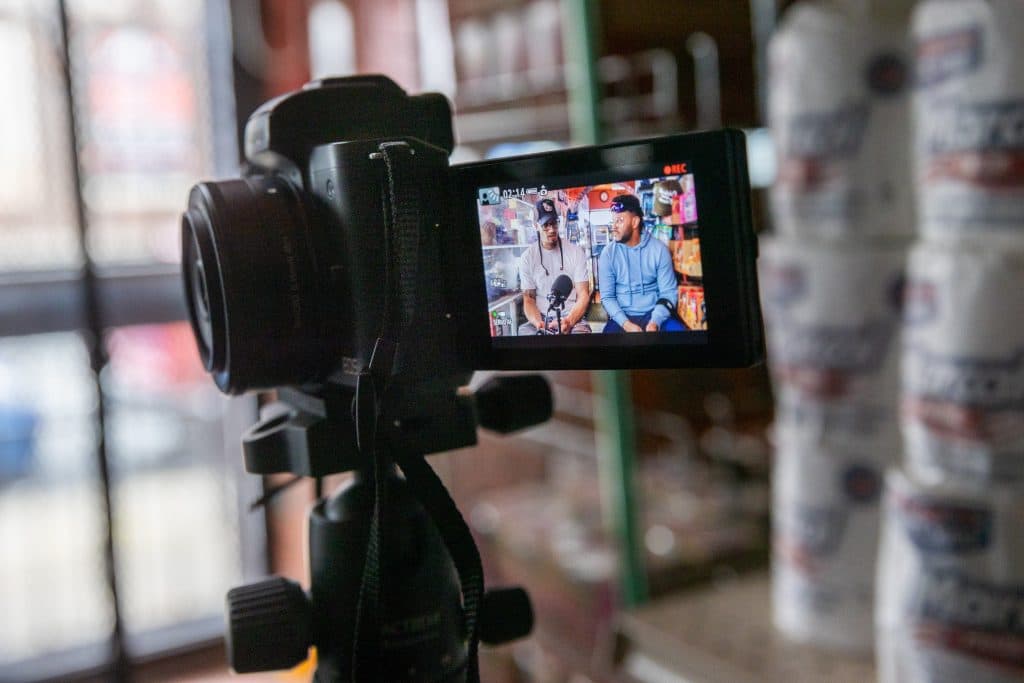
The Papi Store PHL isn’t just a bodega. It’s also a cultural and creative hub where hip hop enthusiasts find the perfect setting to record their music, put on performances, and host podcasts alongside members of the Torresdale community in Philadelphia.
For nearly six years, Victor Andrés has served as the store’s owner and financial mastermind. In the early days, one of his most cherished customers was Profit (stage name), who has since become the creative force behind the project. Today, Andrés oversees the bodega’s daily operations while Profit plans the schedule and brings in artists to coordinate recordings and events.
Victor and Profit’s dynamic is grounded in mutual support. Victor offers Profit creative freedom to use his recording equipment in the bodega, and in return, Profit ensures that every guest who records or performs also shops and eats there. During events, the bodega transforms into an ideal studio space that can accommodate around 120 people.
“Doing this, for me, shows that you don’t need much to be creative. You can just walk to your corner store and start creating,” said Profit.
While many bodega owners believe that younger Latine generations are not particularly interested in carrying on bodegas’ cultural and economic legacy, The Papi Store PHL is rewriting the rules of the game. Together, Victor and Profit have built an economic system centered on creativity, using the bodega as a safe space for the community.
The foundation of the bodega legacy remains strong, but its economic structures are increasingly driven by creativity and a renewed desire to build community in fresh, innovative ways.
Madasyn Andrews

¿Las bodegas siguen ofreciendo oportunidades económicas a las nuevas generaciones latine en Filadelfia?
Muchos dueños de bodegas perciben que las nuevas generaciones están menos dispuestas a asumir la exigente ética de trabajo de sus padres. No obstante, este legado puede transformarse y dar lugar a una visión más fresca y creativa que conecte mejor con ellas.
Por: Némesis Mora
Durante más de dos décadas, Raúl Serrata ha mantenido su bodega en la misma esquina de East Walnut Lane, en Filadelfia. En Serrata Grocery Inc., vivió “los mejores años de su juventud”, viendo a sus hijos crecer y convertirse en profesionales. El negocio le dio los recursos económicos para traer a su esposa y a sus hijos desde la República Dominicana a la ciudad. Sin embargo, para Serrata, la bodega es más que un sustento: es su hogar.
Su conexión con los clientes es una parte indispensable del trabajo. A menudo se le ve en la tienda, cobrando en la caja, ayudando a alcanzar productos en las góndolas o brindando apoyo y consejo tanto en momentos difíciles como en momentos de alegría. Cuando la tienda cierra a las 8 p.m., Serrata comienza de inmediato a prepararse para el día siguiente: reabastece los congeladores, limpia el desorden del día y deja todo listo para empezar de nuevo por la mañana. Después de casi 20 años de rutina, suele llegar a casa alrededor de las 9 p.m.
“Paso más tiempo en la bodega que en mi casa”, dijo Serrata. No es casualidad que pase más tiempo allí que en su propio hogar, ya que lo asume como parte del reto y también como un elemento clave del encanto de la bodega.
Serrata tiene diabetes y hay días en que no se siente bien. Aun así, cuando los clientes le preguntan cómo está, evita decir que se siente mal, sabiendo que eso podría “arruinarles el día”.
“Papi, ¿qué te pasa? ¿Por qué estás así hoy?”, le preguntan de inmediato, usando el apodo familiar con el que muchos en Filadelfia se refieren a los dueños de bodegas. Para no afectarles el ánimo, Serrata responde que todo está bien para que puedan seguir con su día en paz.
“Tienes que pasar el día con la mejor actitud; aunque no te sientas bien o tengas un dolor de cabeza leve o un dolor en el pie, tienes que mostrarle a tus clientes que estás bien”, añadió.
Serrata valora profundamente el legado cultural latino—especialmente dominicano—de las bodegas en Filadelfia, pero advierte que muchas podrían desaparecer si no hay quien las siga manejando. Muchos dueños están envejeciendo, dijo, y cada vez se les hace más difícil mantener sus negocios abiertos. Aunque no espera que sus propios hijos continúen la tradición, sí lo ayudan los fines de semana y se mantienen enfocados en terminar sus estudios y construir sus propias carreras. Para Serrata, la solución está en brindar a las nuevas generaciones latine las herramientas y recursos necesarios para continuar el legado de las bodegas.
“Los jóvenes ven cómo viven mamá y papá en las bodegas y no quieren esa vida para ellos”, dijo Serrata. “Tenemos que ayudarles a estudiar y prepararse para el futuro, pero también necesitan entender que deben continuar el legado del negocio”.
“Mis hijos se sentían resentidos por la bodega”
A mediados de 2006, Clara Olivares comenzó su camino como dueña de una bodega en el sur de Filadelfia. Hoy es propietaria de EC Food Market en el oeste de la ciudad. Al mirar hacia atrás, siente una mezcla profunda de orgullo y nostalgia por el trabajo duro y las largas horas que ha invertido durante casi 20 años como bodeguera.
Cuando sus dos hijos eran pequeños, Olivares manejaba la tienda junto a su esposo. Al recordar esos años, admite: “Nos faltó ese tiempo de calidad que debimos haberles dedicado más”. Aunque la familia siempre vivió a pasos del negocio—ya fuera arriba o cruzando la calle—sus hijos aún resienten el tiempo que su madre dedicó a la bodega mientras crecían.
“Creo que una de las razones por las que no quieren continuar en esto es por eso”, dijo. “Me dijeron que le dedicamos demasiado tiempo a la bodega. Ese día en que ambos se sinceraron conmigo fue duro”, añadió, con los ojos al borde de las lágrimas.
A pesar de los retos de manejar una bodega, sus dos hijos siguen vinculados al negocio de distintas maneras. Su hijo trabaja tres días a la semana en el negocio familiar, mientras que su hija ofrece servicios de educación nutricional a bodegas en toda la ciudad como parte de la organización The Food Trust.
Las bodegas son un negocio familiar
Para Rafael Uceta, ser dueño de una bodega es parte del legado familiar. Es uno de seis hermanos con bodegas en distintas partes de Filadelfia y el más reciente en integrarse al negocio. Aunque pasó la mayor parte de su vida trabajando como barbero, sus hermanos lo animaron a abrir su propia bodega, Las Palmas Market, en Kensington a mediados de 2022.
Aunque lleva poco tiempo como dueño, ya siente el peso de las largas jornadas y la inestabilidad económica. Según Uceta, su mayor reto son las estrictas regulaciones municipales sobre licencias de tabaco, diseñadas para reducir el consumo juvenil en Filadelfia. Para él, el tabaco es uno de los productos que más se vende en las bodegas. Si las condiciones se mantienen igual durante otro año, admite que vendería su bodega y volvería a la barbería.
“En esta ciudad, lo que más consume la gente es tabaco”, dijo Uceta. “Es lo que más se vende en las bodegas. Compran más tabaco que comida”.
Según la presidenta de la Asociación de Bodegueros Dominicanos, Enereolina Meléndez, este tipo de regulaciones tiene un impacto directo en los pequeños negocios. Al mismo tiempo, la llegada de tiendas de conveniencia abiertas las 24 horas está atrayendo a más clientes, lo que ha reducido la frecuencia con la que las bodegas son visitadas.
Aunque no existe un conteo oficial de bodegas en Filadelfia, Meléndez estima que hay alrededor de 2,500 en la ciudad, aproximadamente un 80% de ellas propiedad de dominicanos.
Las nuevas generaciones replican el sistema económico de sus padres
Muchos pequeños empresarios latinos han iniciado sus negocios utilizando un método de ahorro y préstamo transmitido por padres, familiares y amigos en sus países de origen. En el Caribe—especialmente en la República Dominicana—se le conoce como “san” o “tanda”. En América Latina y partes de África se le llama “susu”, y en Estados Unidos se reconoce como una asociación rotativa de ahorro y crédito (ROSCA).
Según Ana Mariela Ramos, hija de un bodeguero y profesional en administración de empresas, el susu es un sistema económico ancestral en el que un grupo de personas se compromete a aportar una cantidad fija de dinero semanalmente para crear un fondo colectivo que se entrega a un miembro distinto en cada ciclo.
Ramos aprendió este sistema de apoyo mutuo de su familia y aún lo practica con su círculo cercano mientras trabaja en desarrollar su futuro negocio.
“Así fue como mi familia logró levantar nuevamente su negocio”, dijo Ramos. “Es un sistema del que me gusta hablar porque, cuando los bancos no ven nuestro valor, nosotros sí lo vemos, nos apoyamos y crecemos”.
Aunque Ramos no desea continuar con el negocio familiar de la bodega, sí está comprometida con honrar y expandir esa base económica transmitida por generaciones, así como educar a otros para que puedan continuar ese legado.
Reinventando la bodega con hip hop
The Papi Store PHL no es solo una bodega. Es también un espacio cultural y creativo donde entusiastas del hip hop encuentran el lugar perfecto para grabar música, realizar presentaciones y producir podcasts junto a miembros de la comunidad de Torresdale en Filadelfia.
Desde hace casi seis años, Víctor Andrés ha sido el dueño y cerebro financiero del negocio. En sus inicios, uno de sus clientes más frecuentes era Profit (nombre artístico), quien hoy es la fuerza creativa detrás del proyecto. Actualmente, Víctor supervisa las operaciones diarias de la bodega, mientras que Profit organiza la agenda y convoca a artistas para coordinar grabaciones y eventos.
La dinámica entre ambos se basa en el apoyo mutuo. Víctor le da a Profit libertad creativa para usar su equipo de grabación dentro de la bodega, y a cambio, Profit se asegura de que cada invitado que graba o se presenta también consuma en el negocio. Durante los eventos, la bodega se transforma en un espacio tipo estudio con capacidad para unas 120 personas.
“Para mí, hacer esto demuestra que no necesitas mucho para ser creativo. Puedes simplemente ir a la tienda de la esquina y empezar a crear”, dijo Profit.
Mientras muchos dueños de bodegas creen que las nuevas generaciones latinas no están interesadas en continuar el legado cultural y económico de estos negocios, The Papi Store PHL está reescribiendo las reglas del juego. Juntos, han construido un sistema económico centrado en la creatividad, utilizando la bodega como un espacio seguro para la comunidad.
La base del legado de las bodegas sigue siendo fuerte, pero sus estructuras económicas están cada vez más impulsadas por la creatividad y por un renovado deseo de construir comunidad de formas frescas e innovadoras.


Autor(a)